Static website SEO: content, indexing and performance

- Seo
- October 15, 2026
Table of contents
A static website can be indexed and appear in search results without an SEO plugin. SEO depends on the published pages, their accessibility and the usefulness of their information, rather than a particular CMS running on the server.
Static delivery offers a useful foundation: content can be available in the HTML, with less application work required to serve it. Effective visibility still requires pages organised around audience needs, sensible links and checks on the actual published output.
The overview of static HTML and CSS websites with AI explains the wider business case. This guide covers the search foundations without treating architecture as a ranking guarantee.
Why static delivery provides a useful SEO foundation
When the main content is already in the HTML document, readers and automated systems can access it without waiting for an application to rebuild it in the browser. Text, headings and links can be delivered directly.
A static file is not automatically indexable, however. Access restrictions, instructions excluding a page from results or missing links can affect discovery. Check the published website rather than assuming that files in a project folder are publicly accessible.
Shared templates can produce metadata and page structure consistently. A static generator can apply these rules when new pages are created, reducing repetitive manual entry.
Give each page a clear purpose
A page should address a recognisable need: understanding a service, solving a problem or comparing options. Combining unrelated keywords makes the primary answer harder to identify.
A service page and a practical guide can serve different purposes. The service page explains the offer and enquiry process; the guide helps readers assess a problem and links to relevant help when appropriate.
Use a title that accurately previews the content. Answer the central question early, then develop criteria, examples and limitations. This makes the page easier to read and clarifies how its ideas relate.
Depth should follow the question. A short, complete explanation is more useful than repeating the same answer under several headings.
Check the SEO information in generated pages
The business owner need not inspect every line of code, but should know what information the website needs to publish consistently.
| Element | Purpose | Practical check |
|---|---|---|
| Page title | Identifies the main subject | Specific and faithful to the content |
| Description | Summarises the page’s value | Unique and accurate |
| Section headings | Organise the explanation | Clear, descriptive hierarchy |
| Primary URL | Declares the preferred version | Matches the intended public address |
| Social image | Supports sharing | Available and relevant |
| Structured data | Describes content in a standard format | Matches visible information |
Search engines may choose different result descriptions for different queries. A useful meta description still matters, but should not promise outcomes absent from the page.
Templates can generate structured data. Do not add review, FAQ or other claims that the visible content does not support.
Make important pages easy to reach
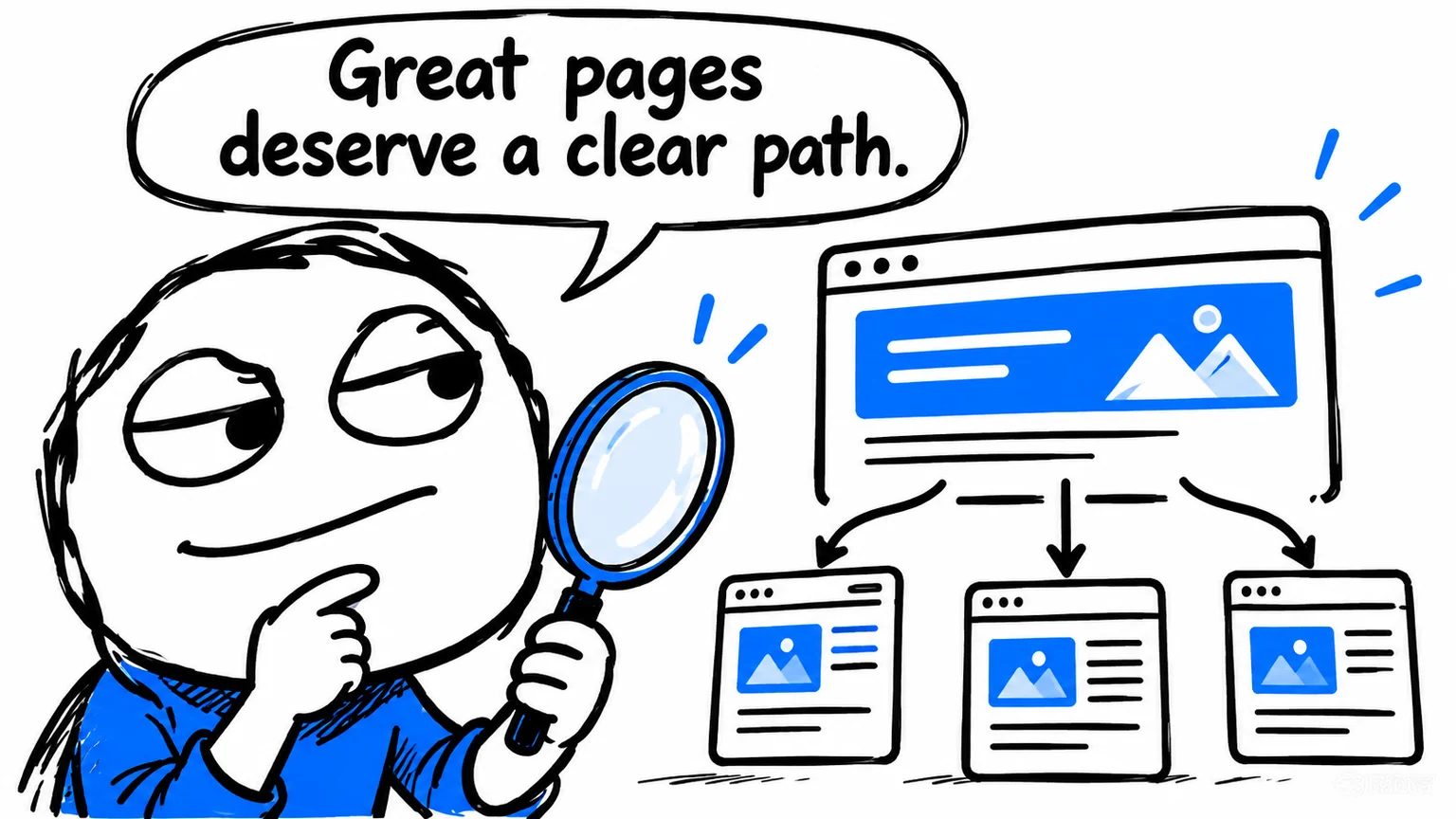
Navigation, service pages and articles should create sensible routes through the website. Link when another page provides a useful next step, using wording that describes the destination.
A master article can explain a broad subject and connect to focused guides. Each guide can return readers to that context and, where relevant, offer a route to professional help. The relationship between pages matters more than the number of links.
A sitemap can signal available URLs, but does not replace useful navigation. Check for broken links, important pages reachable only through outdated addresses and unexpected language changes.
Preserve the performance advantage
Prepared HTML avoids asking a CMS to assemble every informational page during the visit. It is a favourable starting point for fast delivery, but real pages still need assessment.
Oversized photographs, excessive fonts, autoplay videos and third-party tools can reduce that advantage. Begin with what visitors actually see and use, particularly on phones.
Laboratory checks help identify problems. Real usage measurements, when available, show experience across different devices and connections. A strong test score alone does not guarantee search visibility or enquiries.
Choose lighter assets and integrations deliberately rather than assuming that a static hosting plan will solve an overloaded design.
AEO and GEO: clear answers with useful context
AEO concerns content usable by answer engines; GEO concerns visibility in generative systems. Useful editorial work makes the subject, answer, conditions and limitations explicit.
For example, answer “Can a static website have a contact form?” directly: it can display a form and connect it to a processing service. Then explain what must happen for an enquiry to be delivered.
No writing formula guarantees a citation in an AI response. For Google’s AI search features, established SEO foundations remain relevant and no special AI markup is required. That guidance should not be assumed to describe every generative system.
Self-contained explanations, clearly labelled hypothetical examples and consistent business information improve answer quality. Repetitive FAQs and unsupported statistics do not make content more trustworthy.
Review visibility after publication
Check whether important pages are accessible and indexed, which searches bring visibility and which journeys lead to enquiries. Interpret changes in context instead of attributing every movement to the website technology.
When migrating from a CMS, assess changed URLs and content alongside the architecture. For a new website, establish a coherent, measurable foundation first.
To assess your own project, contact me about static website SEO. I can review its structure, content and published pages and identify useful improvements.