Static website hosting and maintenance: costs and management

- Web developing
- October 15, 2026
Table of contents
A static website can simplify business website management, but it does not remove all costs or maintenance. The benefit is reducing the components needed to publish informational pages, with a clear process for updates, security and recovery.
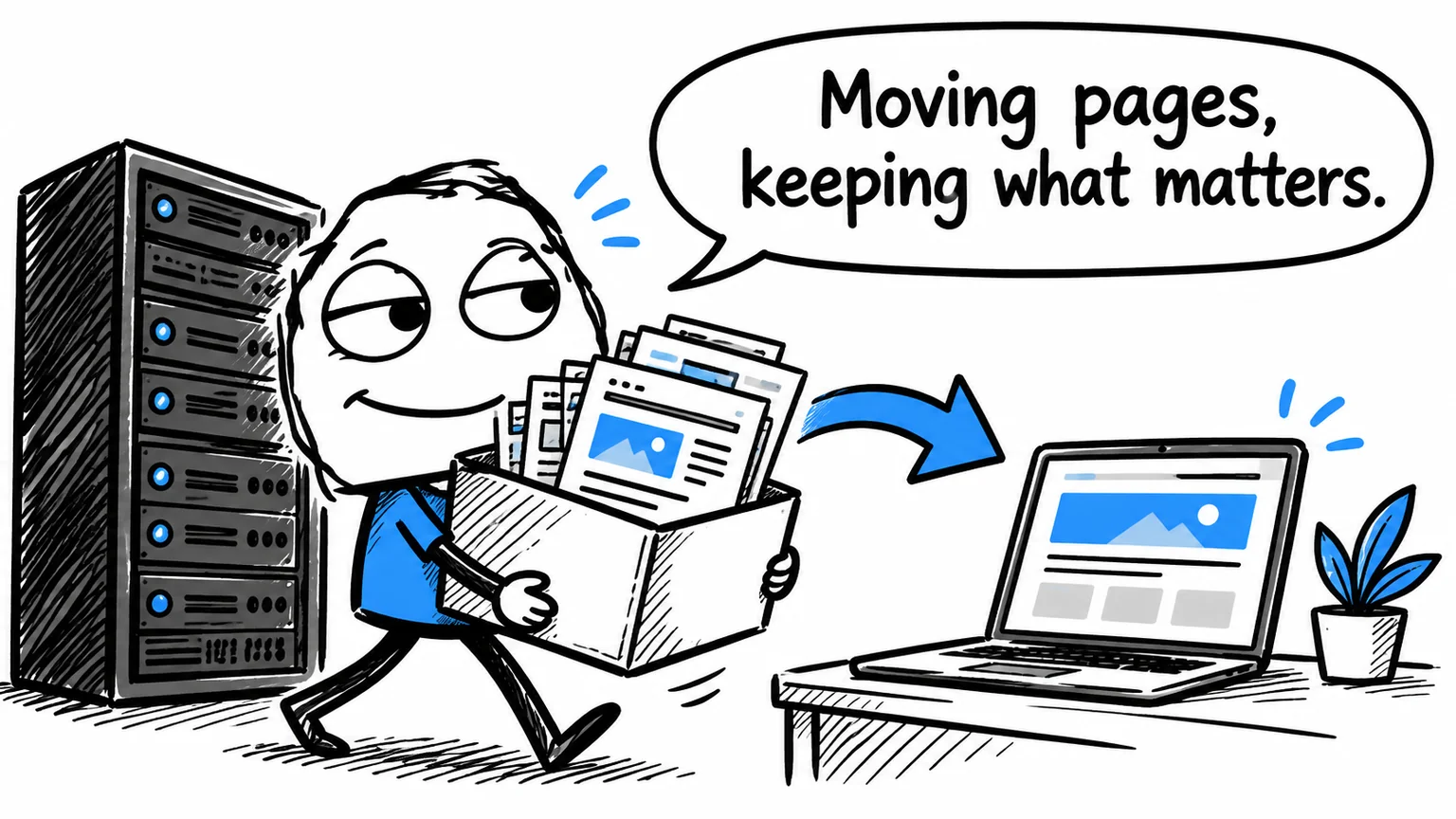
When pages already exist as HTML, public hosting does not necessarily need PHP or a database. That can simplify infrastructure and remove recurring CMS tasks. Domains, access, files, integrations and operational responsibilities remain.
The overview of static HTML and CSS websites with AI covers the broader approach. This guide looks at ongoing costs and management.
What static website hosting needs to provide
Hosting must deliver HTML, CSS, images and any JavaScript resources. A purely static project does not need an application environment to assemble pages during each visit.
Storage alone is not the deciding factor. Consider custom domains, HTTPS, redirects, error pages and the ability to restore an earlier publication. Existing URL continuity matters particularly when migrating another website.
Updating methods also influence the choice. Some projects publish a folder of completed files; others generate the site from source material through a publishing process. Hosting and deployment tools should fit the chosen method without unnecessary complexity.
The business should understand how an approved update reaches the public site, even when a developer handles the technical details.
Compare the costs that change and those that remain
Removing a public CMS can reduce application resource requirements and maintenance for extensions no longer used. It does not establish a universal saving or a fixed percentage reduction.
| Cost | What to assess |
|---|---|
| Domain | Renewal and ownership remain necessary |
| Page hosting | Resources, traffic and required features |
| Business email | Can be separate from website hosting |
| Forms and bookings | Possible service subscriptions and limits |
| Content updates | Frequency and responsibility |
| Build and publication | Tools, limits and process maintenance |
| Initial conversion | Rebuilding, migration and verification |
Compare setup and future operation together. An inexpensive plan may cover pages but exclude email or form processing. An apparently free service may have usage limits relevant to the project.
Start with necessary features and recurring tasks, then compare hosting and support arrangements. Otherwise, low headline prices can conceal work that must be purchased separately.
Maintenance changes rather than disappears
A CMS absent from public hosting does not need updating there. The same applies to plugins and components removed from the website. Their application compatibility checks are no longer part of that public system.
Maintenance shifts towards content, source files, generation tools and connected services. Development dependencies still need management even when they do not run during a visitor’s request.
The useful distinction is between what produces the site and what must remain available to visitors. Updating development tools should not automatically require changing public content.
This clearer scope can make maintenance easier to plan, provided someone remains responsible for the source project and publication process.
Protect accounts and publishing access
Static files do not expose an absent CMS administration panel or server functions. Those particular attack paths are reduced, but other risks remain.
Someone gaining publishing access could replace the pages. Compromised accounts or unchecked scripts can therefore affect a static website. Hosting, repositories and connected services need protected credentials and permissions appropriate to each role.
The business should retain control of its domain and key accounts, with suitable access delegated to professionals. Review access when a collaborator leaves or responsibility changes.
The aim is an arrangement that staff can understand and maintain, rather than one dependent on an undocumented personal account.
Back up the source project as well as published pages
A copy of the live pages is useful, but may not be enough to continue development. If content and templates generate the site, recovery also needs those sources and instructions for rebuilding the output.
Cover project files, images and necessary configuration without accidentally publishing credentials. Enquiries and bookings stored in separate services are not automatically included in a backup of the website pages.
The meaningful test is whether a working version can actually be restored. A folder labelled backup does not establish that recovery is complete or usable by someone taking over the project.
Keep recovery responsibilities clear, including which person or provider handles information outside the website itself.
Agree who handles future updates
Define the route from request to preparation, preview, approval and publication. Occasional updates may need a simple process; an editorial team needs a more developed arrangement.
AI can assist with repetitive changes and consistent page preparation. Wording, facts and visual results still require review. The cost depends on the real work involved, rather than technology alone.
Document the handover essentials: file locations, publishing instructions and indispensable services. A website that is simple to serve should also be possible to transfer to another professional.
Before committing to the approach, walk through a representative update. This reveals whether the proposed workflow fits the people responsible for content.
Assess a management proposal by its practical scope
A clear proposal separates initial delivery, recurring services and work performed on request. It explains included features, content updates and responsibility when something fails.
Static delivery is useful when that arrangement removes unnecessary components and makes work more predictable. If integrations multiply without clear ownership, the initial simplicity can disappear.
To review your own requirements, contact me about static website hosting and maintenance. I can help distinguish necessary services from removable components and organise a maintainable setup.