Italian web developer for website support and local coordination

- Web developing
- August 28, 2026
Table of contents
When an international company already has an Italian website, the challenge is often not creating it but keeping it operational. CMS changes, localized content, technical faults and global releases all need an owner who can assess their effect on Italy.
Need help with a Joomla website? Get Joomla website support.
This ongoing assistance is included in my broader Italy website support services for international marketing, ecommerce and IT teams.
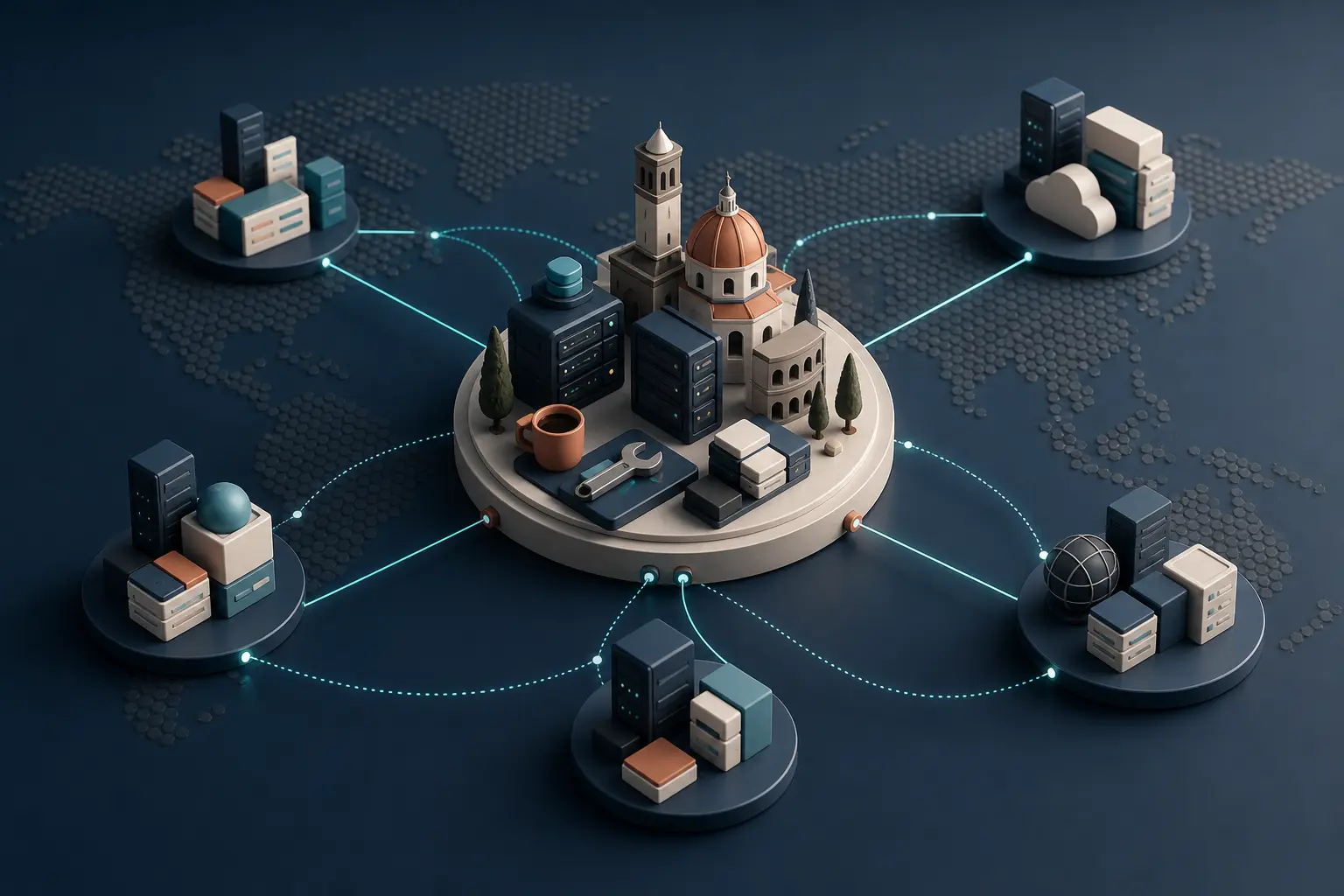
An Italian web developer for website support can become the technical link between headquarters and the local version. The role does not replace marketing or IT. It covers the local execution that otherwise falls between teams or requires several suppliers for a small change.
When local Italian website support is needed
The need commonly appears when:
- the central team does not know Italian content and journeys;
- the original agency does not handle day-to-day changes;
- local marketing lacks CMS access or technical capacity;
- global updates introduce faults in the Italian version;
- forms and sales enquiries reach the wrong destination;
- a campaign or landing page must be launched quickly;
- nobody can diagnose an issue reported in Italian.
Support can be a defined intervention or an ongoing relationship with agreed priorities, access controls and working methods.
Local context is also valuable when customers, sales staff or support agents report a fault in Italian. The developer can reproduce it, document the evidence and convert the report into a clear technical task, reducing the number of handoffs before resolution.
What an Italian web developer can manage
The exact scope depends on the platform and existing responsibilities. Typical work includes:
- controlled maintenance and updates;
- troubleshooting errors, layouts and functions;
- managing WordPress, Joomla and ecommerce systems;
- implementing and formatting localized content;
- building or adapting pages and components;
- responsive and browser testing;
- checking forms, email delivery and contact routing;
- managing URLs, redirects and metadata;
- technical and on-page SEO;
- staging tests and release support.
The first step is always to understand architecture, ownership and constraints before changing the live website. The developer should know which components are local, which are shared globally and who approves each type of change.
Coordination with international marketing, IT and agencies
An effective local developer works within existing processes. Tasks can arrive through the company’s ticketing system, changes can be made in staging or a repository, and test results can be documented. If a defect belongs to global code, the local contact gathers evidence and escalates it to the responsible team. If it is specific to Italy, it can be resolved within the agreed scope.
This prevents marketing from having to translate technical errors and stops central developers from reconstructing the Italian context. A useful request identifies the objective, URL, urgency, environment and acceptance criteria. The developer returns the diagnosis, impact, completed work and validation notes.
For companies using several suppliers, this role should reduce ambiguity rather than create another management layer. The value is direct technical ownership of local execution.
Ongoing maintenance or specific interventions
Not every company needs the same support model. Ongoing assistance suits websites with frequent content updates, campaigns, catalogues or dependencies that require monitoring. It may include a task queue, periodic checks and coordinated releases.
Defined interventions are appropriate for:
- fixing an identified fault;
- implementing a group of pages;
- performing a technical or SEO audit;
- validating a release on the Italian version;
- migrating content or configuration;
- recovering a project left by the previous developer.
The final case needs more than an ordinary support ticket. A structured takeover of the existing Italian website is required to recover access, backups, documentation and technical knowledge safely.
Local support for content implementation
Italian website support may include implementing approved translations. The developer places copy in the correct components and checks headings, links, images, metadata, forms and responsive behaviour.
When strings come from a theme or plugin, they can be localized at the appropriate layer instead of through fragile direct edits. If copy does not fit a component or becomes unclear in context, the developer gives the editorial team the technical detail needed for revision.
This is not a replacement for professional translation. It connects linguistic work to the real website. The guide to website localization for Italy explains the broader process when a complete local version needs to be created or redesigned.
SEO and quality checks for the Italian version
Small changes can affect indexation and traffic. A URL change without a redirect, a canonical copied from the wrong language or a page left as noindex can hide otherwise correct content.
Local checks may cover:
- status codes and redirects;
- titles, descriptions and headings;
- canonical,
hreflangand sitemap entries; - internal links and orphan pages;
- images and alternative text;
- analytics events and conversions;
- performance and mobile behaviour.
Validation should match the risk of the task. A copy edit does not need the same test plan as a template update or migration, but every release benefits from explicit acceptance criteria.
Starting a local technical support relationship
An initial discussion should cover the website, technology, recurring needs and team structure. Credentials should not be sent in the first message. Secure access methods, roles and available environments come first.
An onboarding phase can then include a technical audit, system inventory, backup verification and prioritized work list. This determines whether defined tasks or ongoing support is the better arrangement.
A local technical contact is successful when the work becomes easier to control: tracked requests, clear ownership, documented testing and direct communication with both decision-makers and developers.
If your company needs dependable support for its Italian website, contact me to discuss local technical coordination.