Ecommerce localization in Italy: catalogue, checkout and technical support

- Web developing , Seo
- August 28, 2026
Table of contents
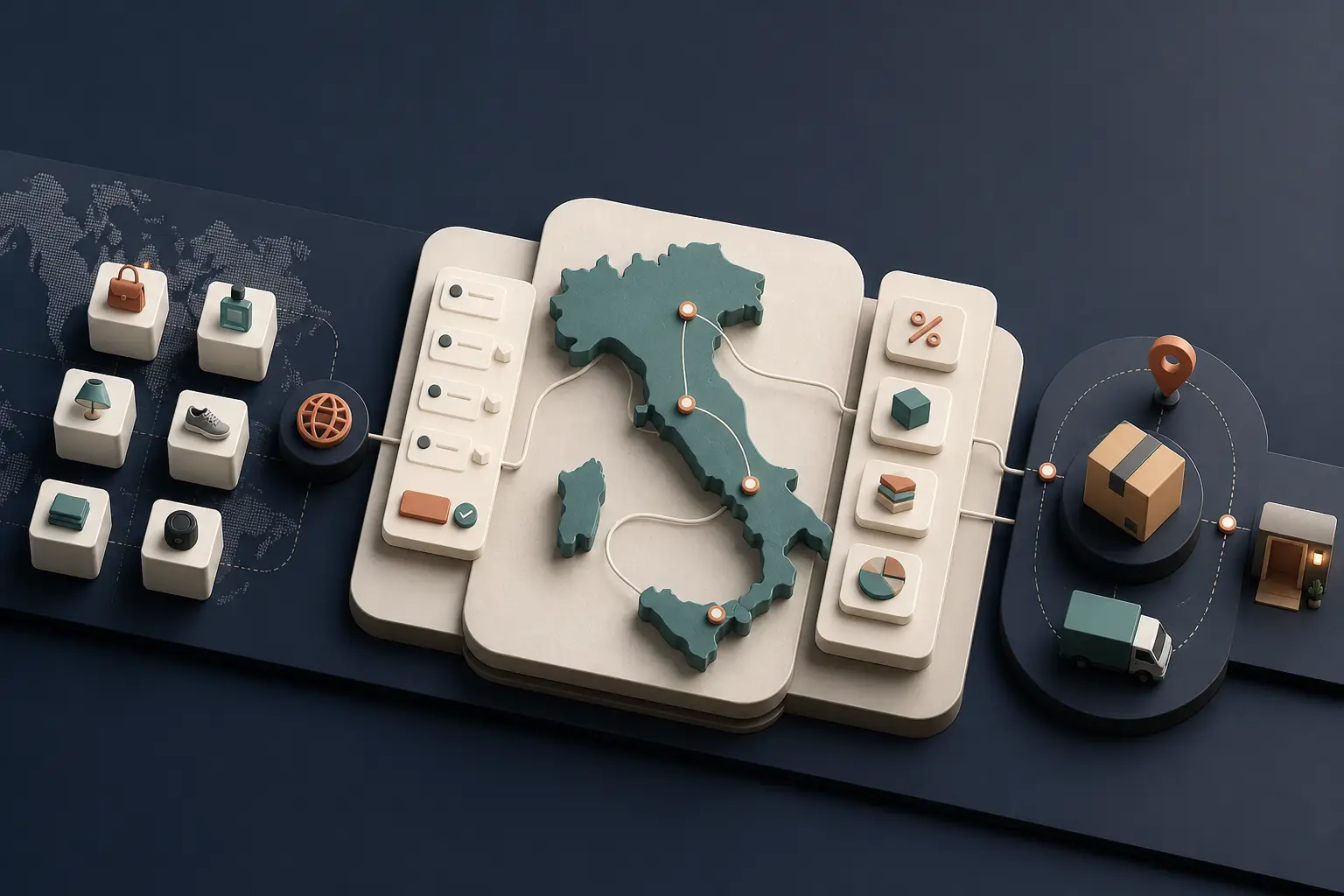
Ecommerce localization in Italy covers the complete purchasing journey, not only product descriptions. Catalogue, search, pricing, taxes, shipping, payments, checkout, emails and support information must create a coherent experience for Italian customers.
Need help with a Joomla website? Get Joomla website support.
It forms part of my Italy support for international websites and ecommerce operations, alongside localization, maintenance and technical takeover services.
A foreign company may already have a mature platform and need only the local implementation. In other cases, an Italian store exists but technical faults and outdated content limit its performance. An Italian ecommerce developer can support both situations while working with the company’s international ecommerce team.
What to localize for an Italian ecommerce store
Start by mapping the customer journey from entry page to post-purchase service. Review areas include:
- categories, attributes, filters and product pages;
- internal search and suggestions;
- applicable prices, taxes and promotions;
- available payment methods;
- shipping zones, costs and delivery estimates;
- basket, checkout and customer account;
- validation and confirmation messages;
- transactional emails and tracking pages;
- returns, support and informational content;
- analytics and conversion events.
The global offer does not necessarily need to be copied in full. The Italian catalogue may have different availability, variants or commercial conditions. These rules should be established before importing localized content.
Assigning ownership to each data type prevents confusion. The central team may control price and availability while the local contact reviews copy, informational pages and presentation in Italian. A simple responsibility matrix clarifies which system prevails when data differs.
Product translation is not enough
A translated product page may use terminology Italians do not search for, display unsuitable measurements or link to an international shipping policy that does not apply. Parts of the interface may also come from a theme or extension and remain in the source language.
Commercial localization adapts tone, sales arguments, essential information and calls to action. Technical localization ensures data enters the right fields, variants and filters work, and new copy does not create layout errors or SEO duplication.
Customers should understand what they are buying, the complete cost, expected delivery and how to obtain help. Uncertainty in any of these areas increases abandonment and support requests.
CMS and localized catalogue management
WooCommerce, PrestaShop and other ecommerce systems provide different multilingual functions. Plugins, modules, feeds and integrations add further layers. Before editing products, identify the authoritative data source and synchronization rules.
Technical work may include:
- configuring the Italian language and store view;
- importing or updating product content;
- associating products across languages;
- managing categories, attributes and variants;
- localizing theme, module and email strings;
- checking ERP, PIM or marketplace synchronization;
- creating backups and testing bulk operations in staging.
Changes must respect the existing data model. Manual edits can be overwritten by the next feed if ownership is unclear, while a poorly planned import may affect every market rather than Italy alone.
Payments, shipping and the Italian checkout
Checkout is where copy and configuration meet. Testing should use Italian addresses and cover the tax rules, promotions, delivery methods and notifications approved for the project.
A useful test set includes:
- desktop and smartphone purchases;
- registered and guest users, where supported;
- simple products and variants;
- different addresses and Italian postcodes;
- successful, rejected and interrupted payments;
- calculation and display of all costs;
- customer and administrator emails;
- order status updates.
Legal, tax and contractual choices must be validated by the company’s qualified advisers. The developer’s role is to implement approved requirements and confirm that the platform applies them consistently.
SEO for ecommerce localization in Italy
Italian product and category pages should match local searches without competing unnecessarily with each other or with international versions. Keyword research informs category labels, product titles and supporting content.
Technical and on-page checks include:
- clear product and category URLs;
- titles, descriptions, H1s and useful page copy;
- canonical and multilingual signals;
- control of filters and parameter pages;
- redirects from replaced URLs;
- structured data matching price and availability;
- sitemaps and internal linking;
- performance and Core Web Vitals.
Translating a large catalogue without shared rules quickly creates duplicate metadata and inconsistent terminology. Define editorial templates, data fields and technical checks before scaling production.
Quality assurance before launch
Ecommerce QA must combine language review with functional testing. A local reviewer checks clarity and natural wording; the developer validates components, integrations and responsive behaviour.
Issues should be prioritized as purchase blockers, trust or comprehension problems, and non-critical improvements. The release also needs a backup, deployment plan and practical rollback option.
Test evidence should record the device, account type, address scenario, payment result and expected outcome so that fixes can be verified consistently.
After launch, monitor application errors, orders, forms, feeds, analytics, crawling and indexation. The wider Italian website localization checklist is useful for corporate and informational sections outside the store.
Ongoing Italian ecommerce support
Localization does not end at launch. Campaigns, new products, CMS updates and changes from the central team can introduce untranslated strings, extension conflicts or checkout faults.
A local developer can implement content, troubleshoot issues, test global releases against the Italian journey and coordinate with marketing and IT. Support may be ongoing or limited to scheduled releases, campaigns and specific tasks.
If the store already exists and its previous supplier is unavailable, a structured takeover of the existing Italian website or ecommerce platform can recover access, knowledge and operational continuity without automatically rebuilding it.
If you need an Italian ecommerce experience that is localized and technically tested, contact me to discuss support for your store.