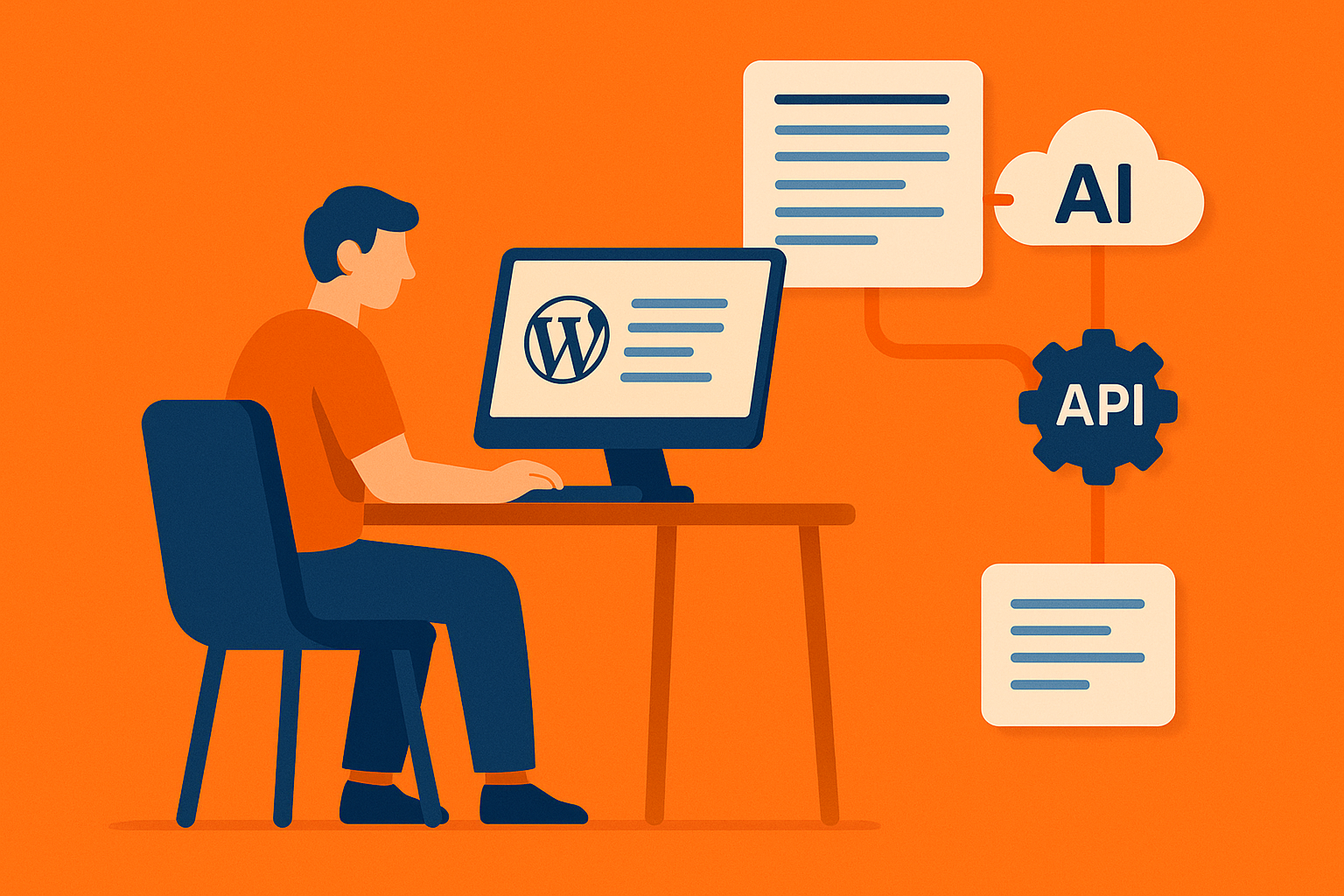
Automatic Content Creation in WordPress Without Plugins: My Experience with OpenAI APIs

- Web developing
- June 18, 2026
Table of contents
Automatic content creation in WordPress without plugins
Many developers and webmasters look for ways to automate content creation in WordPress using AI-powered plugins. However, my experience with these plugins has been disappointing: they often feel chaotic, unclear in their operation, and hard to control. Moreover, the costs can be high or not fully transparent. For technical help, see my WordPress support service.
Why avoid AI plugins for automatic content
Here are some reasons I decided to move away from common automatic content generation plugins:
- Lack of control: managing prompts and customizing output is difficult.
- Hidden or high costs: many plugins come with unclear subscription plans or additional fees.
- Limited functionality: they don’t allow integrating personalized categories, tags, or writing styles.
The alternative: directly using OpenAI APIs
The approach I chose—and recommend to industry professionals—is to use OpenAI APIs such as ChatGPT directly to generate content:
- Full control over prompts and text quality.
- Ability to define writing tone, categories, and custom tags.
- Easy integration and extendable scripts for increasingly advanced features.
- Transparent pay-as-you-go pricing.
| Benefits of using OpenAI APIs directly |
|---|
| Full input and output control |
| Customizable tone and content |
| Clear and scalable costs |
| Script expandability |
Tips for getting started
- Study the official OpenAI API documentation thoroughly.
- Create clear, specific prompts to improve content quality.
- Integrate automation with WordPress taxonomies (categories, tags).
- Regularly monitor output to avoid inconsistent content.
FAQ - Frequently Asked Questions
1. Can OpenAI APIs fully replace plugins? Yes, with sufficient technical knowledge you can build more efficient and customized solutions.
2. What is the main advantage of APIs over plugins? Complete control over prompts and output without preset limitations.
3. Are there risks in automating content creation? Human oversight is always necessary to ensure quality and relevance.
In summary, avoiding off-the-shelf plugins for automatic WordPress content creation in favor of directly using OpenAI APIs provides a more professional and flexible approach, essential for those seeking quality and control in their web projects.